Craft Beetle
BOOKS
Reading is a fundamental pillar of my life and the way I was raised. I find that while other forms of media have great value and strengths, books remain the best way to delve deeply into a subject. A book's demand for exclusive cognitive attention gives it the ability to convey more than any other medium. My goal is to read 50 books a year, which is about a book a week. Here are my thoughts on the books I have read.
2026

On Zionist Literature
Reading...
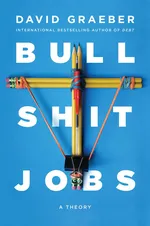
Bullshit Jobs
So much of work is bullshit, it's true. Maybe it's not so much the case in civilized countries
like China and Iran, but here in the Intestine of the Beast it's bullshit. I hear many coworkers
and comrades speak about the uselessness parts of their job and I admit I am not entirely free
of that myself. What makes it worse is that for the bullshit we do, some of us get paid well
enough to be comfortable. But it's a false comfort. It's the comfort of a mouse trapped in a
cage made of sugar.
For all the time wasting and getting treats, we become husks of human beings. We are pacified by
treats and lose our ability to resist genocide and imperialism. Fortunately it seems that this
level of treatlerism is coming to an end, and the Westoidian citizen will be more and more
squeezed. Will we choose socialism or barbarism?
David Graeber, being an anarchist, repeatedly bashed the USSR, the DPRK, and the other
"Socialist Regimes". I, on the other hand, praise those who gave tens of millions of lives
fighting against the fascist Germans, Japanese, and Americans. We'll reconsider Graeber's
opinions on "Socialist Regimes" when an anarchist regime manages to survive a year without
taking US military aid.
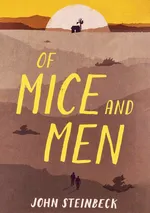
Of Mice and Men
Steinbeck's most famous novel is rightfully regarded as a classic. In just over 100 pages he
fully paints captivating characters and while the whole of the story is set on a single ranch
over the course of a few days it feels so large and encompassing, like we've been with George
and Lennie for a long time. Being as this book is nearly 100 years old at time of reading I knew
the ending, and yet, I held my breath for the whole of the last chapter and was practically
frozen in my seat and my heart pounded in the last scene. Heart shattering.

A Predatory State
This nearly 200 page report details systematic rape, torture, and destruction of the
Palestinian people by the zionist occupation called Israel. The report goes through the
historical accounts of sexualized violence from 1948 to 2023, then details the sexual
humiliation, sexual torture and rape including rape by trained dogs, and sexual espionage and
blackmail that the Israeli states uses to control and destroy Palestinians. It took me a while
to read this report. I can only imagine how hard it was to write and most importantly, how hard
it was to live and suffer through these event that continue to this day. The rot in Israeli
society is bone deep. Everyone is Israel is complicit in these evil crimes, and the western
states that support, fund, and defend them are just as vile. Next time you hear a liberal winge
about armed resistance, remind them that thousands of men are raped and tortured in Israeli
prisons and the only way Palestinians have been able to get them released is in prisoner
exchanges. Israel has no right to exist, and inshaAllah it will cease to exist, and the long
work of healing will begin.
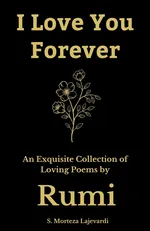
I Love You Forever
I received this collection of poems as gift from a very special person. I savored reading it a
few pages at a time on lazy mornings with my coffee in hand. Though a translation would never do
the original full justice, the poems were still beautiful and evocative on an intoxicating love.
My only desire now is to experience them in their original Farsi.
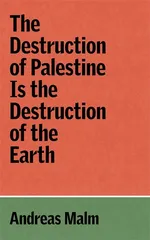
The Destruction of Palestine is the Destruction of the Earth
Andreas Malm succinctly describes how the genocide in Palestine, perpetrated by Israel, funded
and armed by Amerika, is not an isolated event, rather it is a consequence of deep imperial
systems. He make a very clear connection between British destruction of Palestine in 1840 to the
Nakba in 1948 to the genocide in Gaza starting in 2023. All built upon fossil fuels, capitalism,
and the imperial drive to capture more and more raw material and fuel inputs and markets for
their outputs. And unlike other western Marxists, Malm strongly supports armed resistance and
rejects the lobby theory of Israeli control of an otherwise benign American empire.
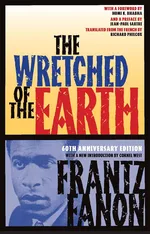
The Wretched of the Earth
Comrade Fanon is the type of author that feels like not only is he speaking directly to me, but
speaking directly with me. He will make a claim, and I will mull it over, then he'll explain
further like an uncle out having an afternoon coffee with his now mature nephew.
Fanon starts by describing the state of the Algerian before the revolution, how they are made
inferior by the colonizing French. This then evolves into the Algerian revolution which rewires
the Algerian mind into one of self worth and comraderly love. This process of mental repair is
what one feels after joining the revolutionary struggle anywhere in the world. When you finally
join the forces of life, and fight in whatever way against the forces of death, you are
fundamentally realigned psychically into a positive frame of mind.
That is not to say that depression and other mental maladies won't afflict you, nor does Fanon
claim that. In fact, Fanon goes to a great lengths to show how colonialism negatively affects
the mind of the colonized, through torture and through life and struggle. He also shows how
colonialism makes sick even the colonizers. Colonialism is a violent and monstrous thing, anyone
who does it is subject to it's corrupting power. Just look at so called Amerikan or Israeli
"culture", a series of depravities, abuse, vapidity, and destructiveness. Colonists are
miserable, let use help them stop being miserable by returning them home.
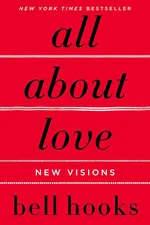
All About Love
I find myself critiquing Bell Hooks' ideas, not for their inaccuracy but for their
limitedness in time and space. She is not dishonest that she is speaking about modern Amerika,
but this is something I have noticed with most western thinkers: the unwillingness or inability
to step away from their own frame of reference. Does this book make any sense at all to a
Chinese person, who's country was the victim of Imperialism nearly a century ago and had since
seen little war or death? Would a Cuban relate at all? If a Lebanese person were to read this
book would they find the problems described to be infantile and easily solved? Do Chechens even
conceive of love as Bell Hooks does. I acknowledge that Bell Hooks is clear about the time and
place she is speaking of, but would it not have been more useful for her to learn about the
whole world's conception of love instead of only really quoting westerners and a few Buddhists?
How can you write this whole book about love and not mention Rumi once? If love is universal and
divine, why are the understanders of love situated exclusively in the loveless westoid murder
machine? Not a mention of revolutionary love, the love to fight and die for one's people. A
westerner would know nothing of that.
I say the least emotionally expressive Vietnamese/Palestinian/Algerian/Zimbabwean martyr has
more love in their pinkie toe than even the most enlightened westoid could ever have. You want
to find love in life? Fight for those who look nothing like you, sounds nothing like you,
worship a different god or no god at all, and have nothing to give you.
Critiques aside, I very much appreciated reading this book. If I didn't I wouldn't have given
copies to other to read and discuss with me. At the very least it is a great start for any
westoid to start deconstructing their understanding of love and detangle it from patriarchy,
capitalism, and domination. When first starting to read the book I was somewhat disheartened.
Bell Hooks describes every increasingly unattainable levels of love that seem to be so good as
to be fictitious. Then she confidently claims that the purpose of life is to experience love. I
wouldn't go that far, I would say the purpose of life is to worship and obey Allah. Doing so
will put you in the path of love. I will continue to think on her ideas and discuss them, that
is high praise for any book.
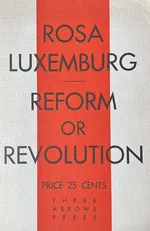
Reform or Revolution
We often find that some of our softer and less clear headed friends think that we can reform the
empire. That we can vote in someone better or advocate for a cause or unionize and that will
bring about a gentle transition to socialism. Comrade Luxemburg explains clearly why this never
works. That the bourgeoisie, the owner class, will never willingly give up what they currently
have. That they sometimes give a little slack only to regain their own strength then they
tighten the leash once more.
What we must then understand is that while we should still demand reforms, we should always pair
them with political education and agitation. In this way, the people learn of their collect
strength to take control, and when the bourgeoisie undo the reforms, the people will revolt
instead of rolling over.
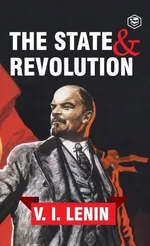
The State and Revolution
Comrade Lenin explains the relationship of the communist revolution with the state. He first
establishes that the state exists as a tool for one class to oppress another, and that the class
currently in control of the state is the bourgeoisie. He also explains that communism has two
stages, the first is commonly called socialism, and will consist of the proletariat taking over
the state machinery, destroying it, and creating a new worker's state for the purpose of
oppressing the bourgeoisie. The second stage of communism is what is commonly referred to as
communism, the stateless, classless, moneyless society. The second stage of communism only comes
about once the population has lived long enough under socialism that the bourgeoisie is extinct,
therefore classes no longer exist as everyone is a worker, therefore the state will cease to
need to exist and will wither away. The book or pamphlet is also chock full of insults against
social democracy which is cool too.
The Soviets and Ourselves: Two Commonwealths
While the author K. E. Holme is anonymous and using a pseudonym, their love for England and the
USSR shows clearly in their writing. We get a comparative look at the two countries with a focus
on the implementation of socialism in the USSR, with detailed descriptions of the actual day to
days workings and the layers of organization and everyday life. I can't help but yearn for life
in the USSR, working hard for the communal benefit, fighting and winning against the Nazis,
being deeply involved in organization and party politics. There is a melancholy one gets from
reading such a book. The author is optimistic about the USSR's future and is confident that the
Soviets, English, and Americans will become fast friends now that the WW2 is over and learn much
from each other. How heartbreaking must it then have been to watch the villains of history turn
their claws and fangs on the USSR and begin the cold war.
The Richest Man in Babylon
I would not have read this book except that it was recommended reading at work. I took many
notes while reading this short simple book, which is unlike me. The Richest Man in Babylon is
libertarian capitalist guide to becoming rich, written a few years before the great depression.
We're already off to a great start. I've classified it as fiction not only for its parable style
but because the theory of wealth expressed could only ever work in fiction. The fundamental take
away is that being rich is the goal of life, that it can be attained by investing 10% of your
income regardless of how much you make, and to give out loans to collect interest. There also
many, many background mentions of slaves which never get addressed as part of the economy. The
rest is the most basic advice like "invest in things you understand" and "don't get scammed."

Vagabond
I read about a third of Vagabond before I lost interest. I didn't find the story particularly
compelling. The drive to become the strongest just doesn't appeal to me, especially not when
it's so spiteful. I hear that Musashi becomes wiser later in the series but I haven't much
motivation to get there. The manga is also praised for its visuals and yet I found it entirely
mundane. I tend to prefer less realistic styles and so it may well be that the technique is very
impressive to people who draw but like a photorealistic drawing it just looks like an impressive
photo to the layman.
Resisting Erasure
A quick introduction to the specifics of the intersection of capital, fossil fuel, and
colonialism in the middle east and Palestine as the linchpin. While it didn't go as in-depth as
I would have liked, I did learn new things such as the change in economy relations after Oslo
and the push and pull factors of normalization. Overall, Resisting Erasure is a good primer into
these topics and servers as a jumping point for further study and discussion.
On Contradiction
Comrade Mao explains contradiction in it's many forms and stresses the importance of
understanding what is the primary contradiction, what are it's components, and what is the
environment the contradictions are in. Having a solid grasp of these concepts and applying them
to the current world allows one to understand the past and better predict the future. Reading
his explanation had me thinking of the potential application to our current time and place. What
are the primary and secondary contradictions in the world/west/us? What are the conditions we
find ourselves in and what conditions would be required to bring about a concrete change to
these conditions? I find myself reaching for Fanon and Rosa Luxemburg.
2025
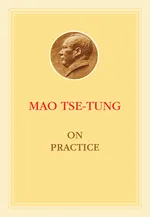
On Practice
In On Practice comrade Mao explains the dialectical-materialist theory of knowledge. He explains
that knowledge is first perceptual, of the phenomena, then logical, the mental process of
figuring out what causes the phenomena. He also makes clear that knowing and going, knowledge
and practice, and reciprocal. Learn something, apply it, learn from applying it, apply what you
learned, and so on. It's a humbling guide to making the progress we need to see in the world.
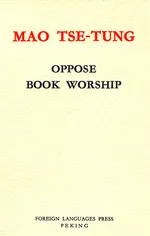
Oppose Book Worship
This is a short essay or guide written by comrade Mao in 1930 and it outlines very practical
methods of going about revolutionary work. As I understand, it's based on the Confucius
principal of inquiry and investigation. To solve a problem you must ask the relevant questions
to the relevant people, investigate deeply, and take your own notes. Once you have investigated
deeply enough, the solution will be evident. This is something we should all apply in all
aspects of our daily lives.
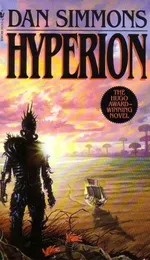
Hyperion
A trusted friend recommended that I read Hyperion after she had read partway through the first
chapter. The book has an overarching narrative of a ultimately lethal pilgrimage, and as the
pilgrims approach their destination they each tell their personal stories of why they chose to
embark upon it. I found the overall world creative and various factions were fleshed out enough
to be believable. The character's stories overlap in time and space, and each deal with religion
as it exists in the far future and with time and loss and a companion of sorts.
The book bears the clear evidence of the time it was written and the author. The future world is
a crude abstraction of the then present. Palestinians are still refugees, though now on Mars.
Their lives are still miserable. Israel is gone with the destruction of Old Earth, but a new
Israel now called Hebron is a whole planet. Complete with a genocide of sentient aliens. Of
course life on Hebron is depicted as utopic. The Palestinian character, Kassad, is a cold and
calculated soldier who kills 15000+ muslims on a planet of sectarian violence. The Jewish
character, Sol, is an educated professor and kind loving father and husband on a tragic journey.
I was most moved by Sol's story. It was well written and very sad. But emotional response aside,
the disparate depictions are clear. The rest of the stories are fine, some better than others.
The detective Brawn's story was probably my second favorite. In the end I enjoyed the book and
I've talked about it with friends which means it was interesting enough to share. Now, back to
my regularly scheduled non-fiction.
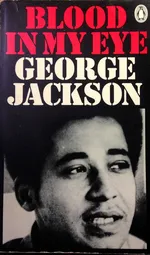
Blood In My Eye
Brother George Jackson was a real one. He understood early on that revolution was the only way
for Afrikan in Amerikkka to be free, and nothing short would suffice. While his writing may seem
idealistic at first, upon further thought one realizes that what comrade Jackson is trying to
describe to us is that the fascist Amerikkkan system is a paper tiger; deadly here and there,
but
spread thin. Amerikkka is the land of individualism. Brother George Jackson gave his life for
collective liberation. Individualism is the death of community, the strength of the people is in
their numbers and their willingness to sacrifice for the greater good.
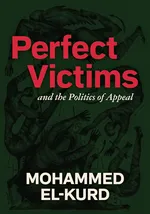
Perfect Victims and the Politics of Appeal
Mohamed El-Kurd is a masterful writer. He blends poetry with journalism and comedy with
critique. Reading this book was like a conversation with a trusted comrade.
It is fitting then that the core purpose of the Perfect Victim is to sharpen our language, give
us the tools to best fight for liberation, to strike fatal blows the empire's propaganda
machine. The Perfect Victim is the idea that some peoples need to be humanized and sanitized
before they can be mourned and justice can be sought. When an African is killed by the American
settler police, the malicious ask about their criminal record or their drug use, the well
meaning tell us that they were an upstanding citizen and a good father. This is all a trap, by
talking about the victim in this way, we have already accepted their killing.
Instead we should assert that "Even If" they were a drug addict and a thief and an abusive
father, nothing permits the state to execute you. If that claim did not sit well with you, you
should introspect. It does not matter if that Palestinian is a woman, child, man, doctor,
journalist, freedom fighter, or a generally bad person, nothing permits the Zionist occupation
from executing them.
The Zionist occupation is wrong, illegal, immortal, unethical, absurd, evil, stupid, racist,
sexist, facist, and all the rest. We all ought to deride them at every turn. Mock their vile
words, laugh at them, ridicule them, bully them, clown on them. This is the very least we can
do. Charlie Chaplain and countless others have made fun of the Nazis. This is the exact same.
That is not to downplay any of the countless massacres and the ongoing accelerated genocide that
they are conducting, far from it. The paper tiger that is the Zionist apartheid state lives on
it's false legitimacy, on it's western backed seriousness. And we all know how to delegitimize
and degrade what tried so hard to be taken seriously.
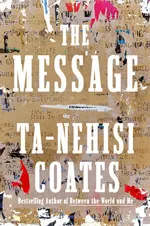
The Message
Ta-Nehisi Coates was introduced to me through an interview he did with Novara Media where he
talked about The Message. I did not read it then, but I did think his observations of apartheid
were clear, though I did not need him to tell me that.
Later on a good friend recommended the book so I listened to the audiobook narrated by Coates
himself. There, through his evocative narration I learned about Coates' life, his journey, and
his reason for writing The Message. That The Message is a book long correction of an error he
has made in invoking Israel a potential model for the reparation to Africans in America as he
outlines in The Case For Reparations. In doing so I had learned about his wrong doing through
his correction, and I grew to respect him even more for that honestly.
Certainly a worthwhile read or listen. Ta-Nehisi aims to haunt the reader and listener and
succeeds.

Settlers: The Mythology of the White Proletariat From Mayflower to
Modern
Settlers is so massive and fundamentally reshaping of Amerikan history that it's difficult to
say anything about other than to urge you to read it right now. Having arrived to it by way of
anti-Zionism I find that everything that exists here in the Amerika also exists to different
extents and ways in occupied Palestine. In Settlers J. Sakai lays out the fundamental structure
of settlerism and it's use of race to define classes under capitalism. He dispels myths of
Amerikan history and the white washing of crimes from past to 1980s present. Over and over the
colonized people in Amerikan, African, Puerto Ricans, Chicano Mexican, and of course the First
Peoples, along with a long list of other "minorities" find themselves fooled into tactical
solidarity with the white "working" class. This solidarity invariably leads to a betrayal by the
white working class and a protection of the empire and it's super profits. Without fundamentally
understanding settlerism, one cannot hope to affect real change within the empire, and the
Amerikan empire is global. Highly informative and very well researched and written book. My
political life has changed significantly after reading it and I now have a clearer path ahead of
me, no easier, but clearer.
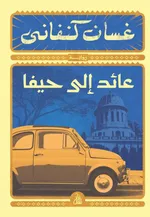
Returning to Haifa
Heart wrenching. I felt myself fill with anger, and hate, then sadness, and mourning, then
determination as I journeyed through this short story. I felt what Said felt, what Safiyya felt,
and what Faris felt. Just as I was most strongly needing Said to take his house back, Kanafani
gives Faris' story to temper that feeling. Just as I most strongly mourned the past, Said
realizes the homeland is the future.
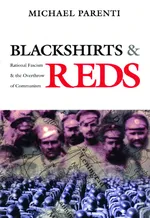
Blackshirts and Reds
Parenti lays out a balanced defense of the soviet union in specific and communism in general in
Blackshirts and Red, and explains how communism's opponents tear it down and destroy it. Highly
informative and ultimately tragic as vast swaths of the global population achieved then lost
communism for various reasons from within and without. Parenti is of course a must read for
anyone interested in communism and socialism, and for those interested in how capitalists and
fascists ruin life for everyone. At the very least, everyone should listen to the Yellow Parenti
lecture.
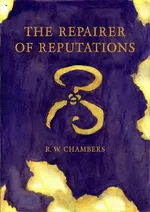
The Repairer of Reputations
An old classic in horror, written in the 1890s and commonly found in The King in Yellow. I
really enjoyed this short story. It was incredibly immersive and the images it painted were
incredible. Right at the end of the story I realized that I had believed the narrator and only
in the last moments did I think back and realize there was no proof for anything they had
claimed. Amazing!

Hellstar Remina
I don't like horror. All my friends know it, I avoid it as much as possible. Not because it
scares me but because it does't interest me.
That being said, I am now engaging with it for the purpose of learning it to be able to run a
game of Mothership. Hellstar Remina is a work by the renowned horror mangaka, Junji Ito. I heard
of him and praise of his work primarily in association with The Enigma of Amigara Fault.
Hellstar
Remina is beautifully drawn and well written. I can't say that I was moved by it in any way, but
it was certainly not a dull read. I found it more funny than scary.
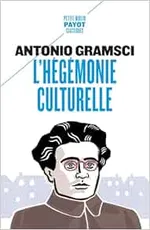
L'Hégémonie Culturelle
This book was lent to me by a very good friend almost as a joke because he gave me the french
translation. The book was originally written in italian so there was no reason to read a french
translation instead of an english one except for the fact that I could, so I did. The reading
was easy but the understanding not so much. I use to be fluent in french but I haven't used it
for over a decade, so reading was more a de-rusting than a theoretical learning experience for
me. I'll have to read it again in english to really understand it but already I am more
comfortable speaking and thinking in french.
Either way I had a really fun time with it.
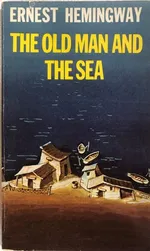
The Old Man and the Sea
Another old man trying to catch yet another fish. I won't spoil how it goes but the journey is
so well crafted. There are no chapters, just one long tale and it is so much better for it. This
is exactly the kind of story I want read to me in a quiet but emotive voice on a sunset beach.
Oddly specific, but read the story and you may have a similar experience of peace and humanity.
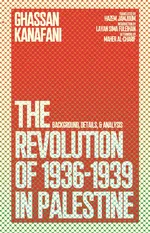
The Revolution of 1936-1939 in Palestine
Ghassan Kanafani widely known in the west for fiction writing, but his non-fiction political
writing is far more well known around the world. The Revolution of 1936-1939 in Palestine is an
analysis of the material conditions that lead up to the revolution and a dissection of the
causes for the revolution's defeat by the British and Zionist forces. The Revolution's crushing
is correctly identified as the precursor to the 1948 Nakba and the events that follow.
Kanafani's writing is concise and to the point, he cites all of his sources and evidence for his
analysis and lays out a clear view of the events and their impact. During my reading I kept
thinking of the parallels in our current time and place and how we can avoid the pitfalls of the
past.

The Left Hand of Darkness
Another of Ursula K. Le Guin's Hanish Cycle novels, The Left Hand of Darkness has many of the
same themes as The Disposessed while on a different planet with unique circumstances. I liked
the story and the ideas it explores. The Dispossessed is still my more favorite of the two.
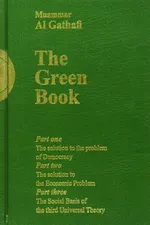
The Green Book
No wonder Obama had him assassinated, Gaddafi had some really good ideas. Did I agree with every
single idea and statement in the book? Maybe not. But his overall political, economic, and
social theory are sound.
2024
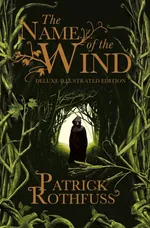
The Name of the Wind
First of all, the magic system in this world is really cool. It's what you would get if you
could quantum entangle whole objects or processes instead of particles. The magic feels and is
treated like a science. I enjoyed Kvothe's escapades with the troupe, in the city, and in the
university. Though he is a boy wonder he still doesn't solve all of his problems easily, far
from it. The one bit I did not enjoy, and it was an overly long bit being as it was most of the
last third of the book was the romance. I just was not interested in all of that, didn't find it
compelling. It's not that it comes out of left field either, the book telegraphs this all
through out, from the songs of mythical ancient lovers to the characters themselves saying it
straight up in the very beginning of the book. What I did not expect was how much time was spent
focusing on the details of teenage romance. The book is still great. I don't think I'll be
reading the second in the series though because it seems like the third and final book will not
be coming out any time soon and I just don't need another cliffhanger in my life.
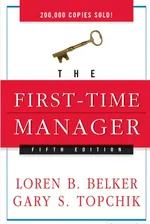
The First Time Manager
This book is surprisingly good. It was another assigned reading for my job. I found it very
clear and informative on the practical skills of management. Of course managerialism is never
the goal, but we do exist in a capitalist society as of now and so we might as well understand
how to navigate it. It is structured as a manual and so whenever there is a need, one can easily
flip to the relevant section and read the author's advice. That advice is generally what you
would get from a more senior competent manager. Worth reading if you are a manager or work with
them, will give you insight into the machine.
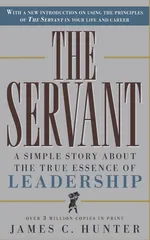
The Servant
The Servant is a book about leadership which attempt to change old corporate habits from old
school management to a more progressive leadership. It was assigned reading and it wasn't
horrible. Well written for what it is and generally inoffensive, except for the anti-union bits.
The target audience are middle to upper-middle class managerial liberals, so obviously a
material analysis of work place conditions, or the idea of self governed democratic labor was
out of the question. Instead we get paternal pseudo-religious platitudes.
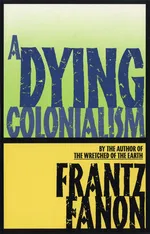
A Dying Colonialism
As I read about the Algerian fight for liberation I gained a deeper understanding of French
Islamophobia. In the course of their colonialism they had a concerted effort to remove the
Algerian women's hijab as a way of westernizing them and asserting cultural dominance. What they
instead got was those women resisting even harder and using the hijab as a weapon against
oppression, by either hiding their identity as they conducted resistance actions or by removing
their hijab thus tricking the french into believing that had won her over and lowering their
guard against her. Now the french continue to ban the hijab as a vindictive act against their
former colonial subjects.
The french attempted to destroy the Algerian understanding of family and culture yet found that
the Algerian people, after a moment of disoriented despair and withdrawal, returned with a
righteous might. Once the Algerian people decided they wanted to be free, there was no stopping
them, and rightfully so. Even a cursory search of French atrocities in Algeria is enough to make
anyone with a consistence resist them. For example, between 8 May – 26 June 1945 the french
massacred up to 45,000 Algerians in the cities of
Sétif and
Guelma.
As with all colonial resistance, the oppressors are fortunate that the oppressed do not seek
revenge, simply freedom and justice. All those who wanted to join the liberation struggle, be
they Muslim Algerian, Jewish Algerian, or Western Algerian were allowed to fully participate and
were welcome to remain in the newly liberated Algeria as equals. This is the faith of all
colonial endeavors, no matter how advanced they may seem. I am now interested in learning about
the Moroccan revolution against the French and the Spanish.
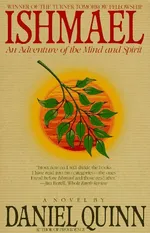
Ishmael
My whole experience with Ishmael was wonderful. It started off with a conversation with great
friend about this, that or the other. She then told me she brought something for me and produced
an old copy of Ishmael, bought from a thrift store some time ago, her bookmark still in it. I
was so touched by the gift that I hungry read the book in a few days. The paper was yellowed
with time, the cellulose broken down into a sweet sent.
Ishmael teaches the main character, and in doing so teaches the reader, that the world is not
made for humans, but that humans were made for it. That when people see the world as theirs,
they inherently seek to conquer and invariably destroy it. And while I disagree on the
theological points, I do agree that humanity should seek to better live in the world, alongside
all of creation, than to dominate and annihilate it.
In the spirit of being gifted the book, I then passed it along to my parents. And after they
finish it I'll give it to a friend, so that all may read what Ishmael has to teach.
You can't escape the cage if you can't find the bars.
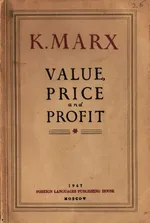
Value, Price and Profit
Marx makes the relationship of value, price, and profit very clear. We often still hear about
how increasing wages would increase the price of goods and services but in reality that is not
the case. It simply reduces profits for the bourgeoisie, profits they derive from the unpaid
portion of the proletariat's labor.
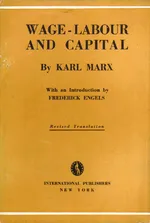
Wage-Labour and Capital
I was already familiar with Real Wages, but I had not thought of Relative Wages which are really
the root of the income inequality by definition. As well I have a new appreciation for the gig
economy as as the ideal capitalist labor market, where all tasks are fractalized and staccato,
disconnecting the laborer from the labor and for each other, opening the door for infinite
scabs.

Abandoned Palestine Refugee
I met Ihmayed Ali and his daughter at a Palestinian book talk where they shared about their
lives and experiences as Palestinian refugees. The talk was moving and eye opening. I then
bought and read his book and was blown away by the images he shared. Ihmayed's autobiography is
written in a very vivid and honest way. The things he goes through, the oppression and abuse,
the survival and success. His story is representative of large portions of the Palestinian
population, a people who endure despite incredible hardship. I highly recommend this book to
anyone seeking a personal look at the Palestinian story.
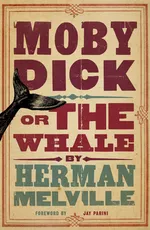
Moby Dick
This book is absolutely massive. Melville clearly loves and knows much about whaling and he
wants to share it all and it takes 600 pages to do so. I didn't love the book in all honesty but
I do respect it. It is one of the oldest books I've read and had it come out in recent decades
someone would have made him cut it down but I'm glad it exists in its entirety. A book about
whales ought to be massive. I wouldn't recommend most people read it but the audiobook by
William Hootkins is very good. I switch to it about half way through reading my physical copy.

Principles of Communism
An easy introduction into communist theory. This is absolutely a must read that lays out
communism for the layman. I found it put already known and understood concepts into a new
perspective, shed a light on some connection previously missed.
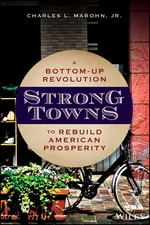
Strong Towns
In Strong Towns, Charles explains the way in which cities use to be built gradually and how that
has changed into an unsustainable model of growth. He makes points about how single family homes
are subsidized by downtown businesses, and about the debt cities find themselves with when they
try to make themselves attractive to developments. What Charles fails to do is question the
underlying economic system, and is instead content on working within capitalism. This is not
surprising and he identifies as a conservative.
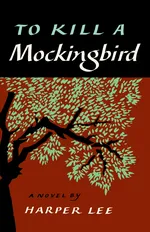
To Kill A Mockingbird
If ever there was a manual on how to be a good father, this would be a contender. This also goes
for what it means to be a man. The way Harper Lee describes Atticus's interactions with his
children and his community and the high regard in which they hold him shows what a man of
integrity is, and shoots dead the idea that people in the past were simply a product of their
time. A wonderful read and a pretty good movie.
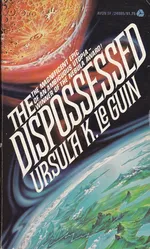
The Dispossessed
A beautiful book that explores one possible way that anarcho-communism could exist. Le Guin does
a great job of constructing a believable society with all of its struggles and beauty. Even if
this isn't the exact way I imagine an ideal world, I find inspiration and hope in the refutation
of the status quo as all that there ever could be. If this is a plausible formulation of
society, what else is possible? A worthwhile and captivating read.
2023
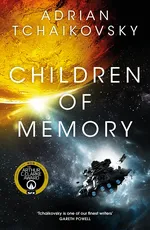
Children of Memory
So far we've had spiders, octopus, true aliens (insert "Nano Machines, Son!" audio sting), as
well an increasingly moody human AI, and neo-humans. What's left? Why it's psychically linked
corvids and a twist so good I won't even explain. Unlike the other two books, this one is a real
mental trip. Elder race is linear but jumps perspectives. The Children of Time has a spider past
and human present timeline it jumps between. And the Children of Ruin has two pasts, one on each
planet, and a present. This book has a looping, recursive, bleeding timeline. As if you wrote
the events of the story on a stack of paper and it got wet, words from one time transferring to
another. It won't make total sense until it all makes sense in the end. Definitely worth a read.
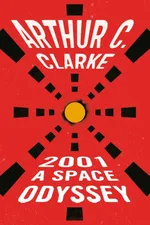
2001: A Space Odyssey
Written with the intent of being adapted into a film, 2001 A Space Odyssey is mostly vibes and
aesthetics. I had vivid images of the stations, space ships, and the cosmos. I hadn't watched
the film until after I read the book
so I found the book quite enjoyable.
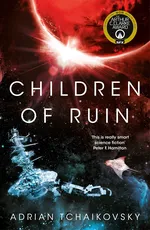
Children of Ruin
So jumping spiders, ancient human AI, and neo-humans weren't enough? Now you want octopus and
truly alien life? Okay! The second book in the Children of Series explores another set of
worlds with new life forms and the way they developed. I am personally very fond of the octopus,
I identify with and strive to argue like they do. They give it their all, use their logic and
emotion, then, if they are truly convinced, they go all in and spread the message as if it were
their own. The trick to this method is balance, you have to be sufficiently hard headed that
only the best ideas with the best evidence can convince you, but you also have to be
sufficiently sincere that once convinced you become a beacon of that idea. If the octopus's
motive force is expression, then the other alien's motive is experience. The other alien seeks
novelty at all costs, but in doing so is apt to destroy what it loves. There is much to learn
from both creatures, and of forgiveness. Another banger from Tchaikovsky.

Born
A neat view into the origins of the Punisher. One can easily see how plausible this course of
character development is and how it leads to one to believe that they are the law and that their
violence is justified. A valuable window into cop culture.

Head Lopper
Head Lopper achieved exactly what it set out to do. It was beautiful and entertaining. At no
point do you feel the head lopper could fail, and that's okay. I enjoyed reading the printed
trade in one quiet summer night. I may read the other entries in the series in the future.
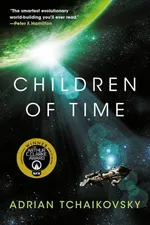
Children of Time
I don't think it's possible to read this book and not fall in love with jumping spiders, and
don't get me started on Dr. Avarna Kern. Tchaikovsky has a gift for perspective. He has the
ability to turn his mind into a blank slate, throw away our human preconceptions, and start a
new from an alien perspective. How would a spiders build a society? How would they react if we
suddenly wanted to take their planet? How would one of humanity's brightest minds deal with
isolation and a fundamental change in cognitive ability? All beautifully explored question in
this book and much more.
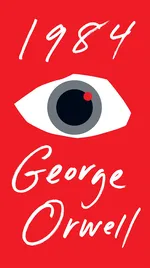
1984
What can I say about 1984 that hadn't been said already? I originally decided to read this book
so that I could confidently say "I read 1984". I only half joke. But as I got into the book I
discovered what all the hype was about. It wasn't mind blowing but I also read it in a post 1984
world which has for nearly 80 years been deeply affected by it. My most appreciated part of the
book is how long ago it was written and how it remains relevant today.

Solaris
Solaris was originally written in Russian and the translation is of disputed quality. This
matters particularly because this book, while set on an alien planet, occurs mainly in the
thoughts of the main character. I enjoyed the explorations of sentience and cognition, and the
soft dreamlike horror that builds up.
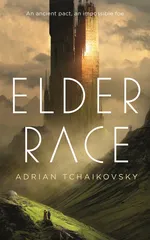
Elder Race
I was in the mall book store with a friend just killing time when the cover of this book caught
my eye. I knew nothing of Tchaikovsky at the time so I had no idea that this was a soft sequel
to his Children of Series. I read the first few pages in that book store and immediately loved
it. I bought it on mid day Saturday, and by Sunday I had finished it. That's not a testament to
my reading speed so much as it is of the books quality. The dual language concept and the
science as magic concept were so good that I needed to know what else he had written, and a few
days later the Children of Series arrived at my doorstep.
2022
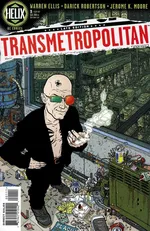
Transmetropolitan
This comic, and Spider Jerusalem, are one of my favorites. Real politics and journalism in a
near future US city. It gave me the same feeling of appreciation for journalism that A Taxi
Driver (the Korean film) gave me. The world needs more Spider Jerusalem's that do true honest
journalism at all costs and by all means necessary.
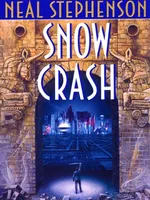
Snow Crash
Right as the Cyberpunk 2077 conversation was warming up, and after watching Action Button's 8
hour review (yes, in one sitting), I was still unwilling to give the game a chance. But, what I
getting really interested in was science fiction and cyberpunk. I decided to pick this book up
and I was not disappointed. One of the seminal works in the cyberpunk genre, and the origin of
the term "metaverse", it paints a funny version of the cyberpunk dystopia we've come to expect.
Yes, the killing, poverty, and misery are all there as substrate for the tech megacorps to
exploit. But the characters and narration lift the mood and focuses on the fun. Easily
recommended.
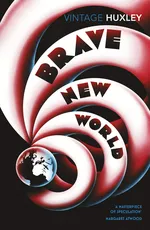
Brave New World
I was recommended this book by a friend. They described it as "The Other 1984". I see the
similarities but the themes not the same. The most striking aspect of the book is how normal
creating people for specific roles is, and how the few intellectual elites are still bound up in
the odd society they are a part of.
2021 and Before
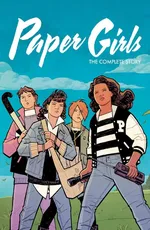
Paper Girls
Hands down one of my favorite graphic novels. I love every character and their development. The
time travel is done really well and, like many great stories, all the fun action and science
fiction ultimately serve a very personal coming of age story.
The Amazon show was really good too but it was
canceled after the first season. We cannot have nice things.
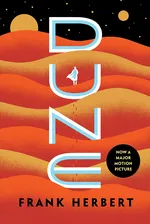
Dune
Dune is science fiction at its finest: an exploration of real human life, relationships,
politics, material conditions, religion, etc all through a medium fictionalized enough to drop
your guard. That's what makes the best science fiction, the abstracted layer that allows us to
explore reality in play. You may not want to talk about the invasion of the Iraq but you do want
to talk about Arrakis. Imperialism and colonialism for the sake of resources such as oil, gas,
and mineral? No. Spice and water? Yes. There is a component of the white savior, inspired by
Lawrence of Arabia, and there is an analog Sufi Islam rather than the approximately 90% Sunni
reality, but it works. My favorite part of reading Dune was the use of Arabic as the "mystical"
language instead of the usual Latin or a fictional language. As an Arabic speaker I had a
slightly different reading experience than the non-Arabic speaker in that I got hints far in
advance of where the plot was going. All in all Dune is an incredible book. I read it a few
years before the first and second movies and I am glad I did.
Highly recommended.
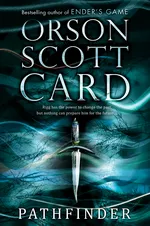
Pathfinder
I remember Pathfinder as being a great science fiction novel that had a fun twist with
space-time travel and time loops. My dad also liked and ended reading the whole series which is
something I really should do, that and read the Ender's game series in full.

Ender's Game
I read Ender's Game a long time ago in elementary school and I still remember it well. Card
paints a fascinating picture of a fascist future fighting aliens and the consequences thereof. I
won't spoil the ending but I will say that this book really clicked with a really young me.

The Law of Ueki
The Law of Ueki was one of the first manga I ever read and I read it before watching any anime
so it essentially set a tone, a standard in my mind. Little did I know it was subverting many of
the tropes of anime and manga by making the main characters whole ambition to simply protect the
environment and be good to the people around him. Ueki couldn't care less about beating others,
getting power, or even looking cool. All Ueki wants is for trees to grow, the air to be clean,
and the people to be safe and happy. And that resonated with me. He's not shy to fight when
necessary but he doesn't relish in it, doesn't make it his primary ambition. Ueki loves life.
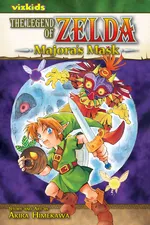
The Legend of Zelda - Major's Mask Manga
This is a neat adaptation of Majora's Mask into a manga. I think adapting relatively linear
video games may be the easiest type of adaptation to pull off and pull it off they did. While I
haven't actually played Majora's Mask I have watched my fair share of walkthroughs, analysis,
and speedruns. The manga was pretty darn good.
© 2024-2026 Craft Beetle | All rights reserved